Guitar History • Pickup & Electronics
The History of Guitar Pickups Through May 1, 2026
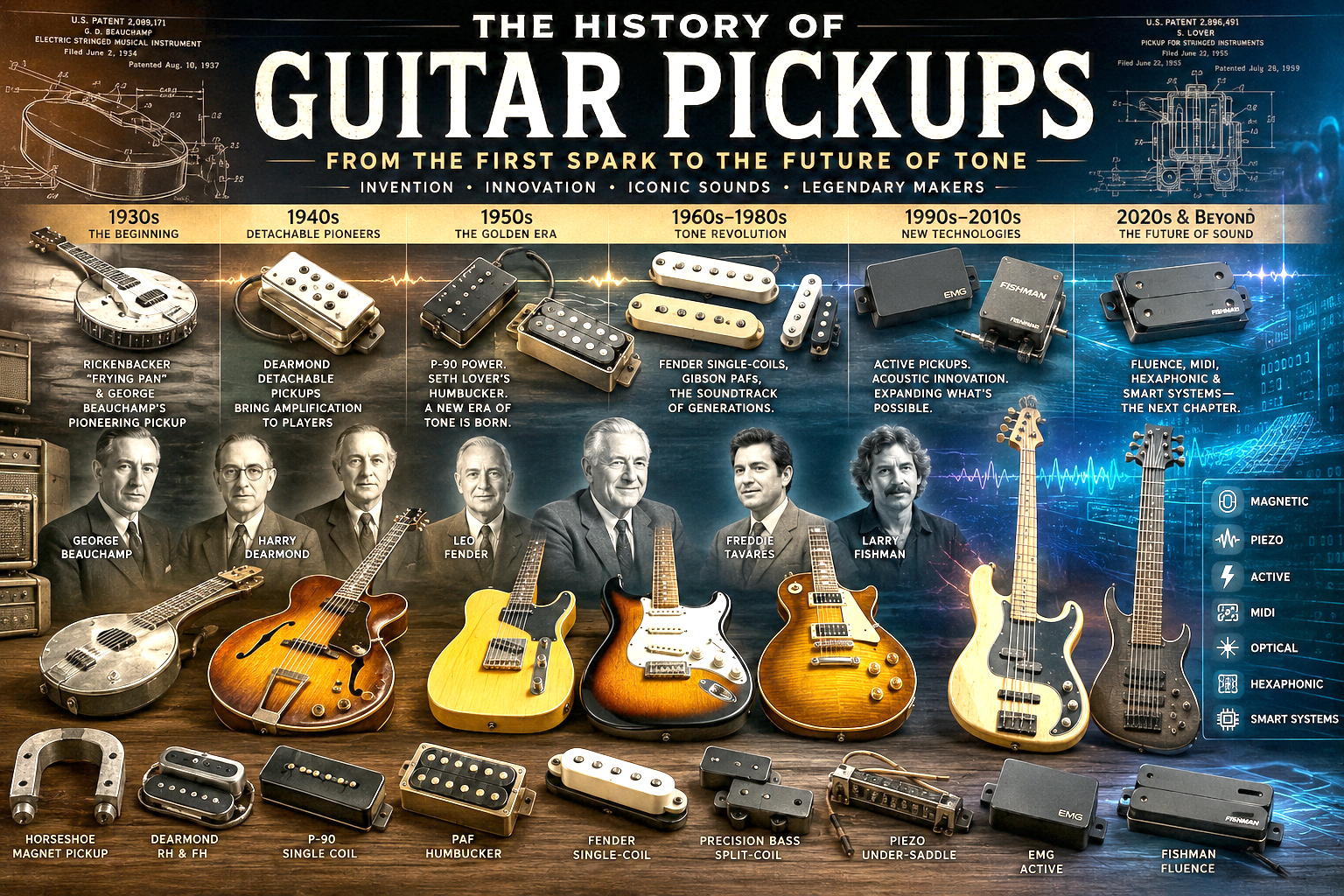
From the Rickenbacker “Frying Pan” to humbuckers, active pickups, acoustic systems, and modern printed-core technology, this is the story of the little devices that helped guitars become impossible to ignore.
The modern guitar pickup did not arrive wearing sunglasses, leaning against a stack of amplifiers, and asking where the stage lights were. It began with a practical problem: guitar players needed to be heard.
In the early dance-band and Hawaiian guitar era, the acoustic guitar often had a hard time keeping up with louder instruments. Horns, drums, pianos, and large ensembles were not exactly whispering politely so the guitar could have a moment. The pickup changed that. It gave the guitar a stronger voice, and eventually helped it become one of the most expressive instruments in modern music.
Section 1
The Big Idea: Before Guitars Got Loud
The history of the guitar pickup begins with a problem every working musician understands: volume. Before the electric guitar took over stages, records, and teenage bedrooms, the guitar often had to fight for space in a room full of louder instruments.
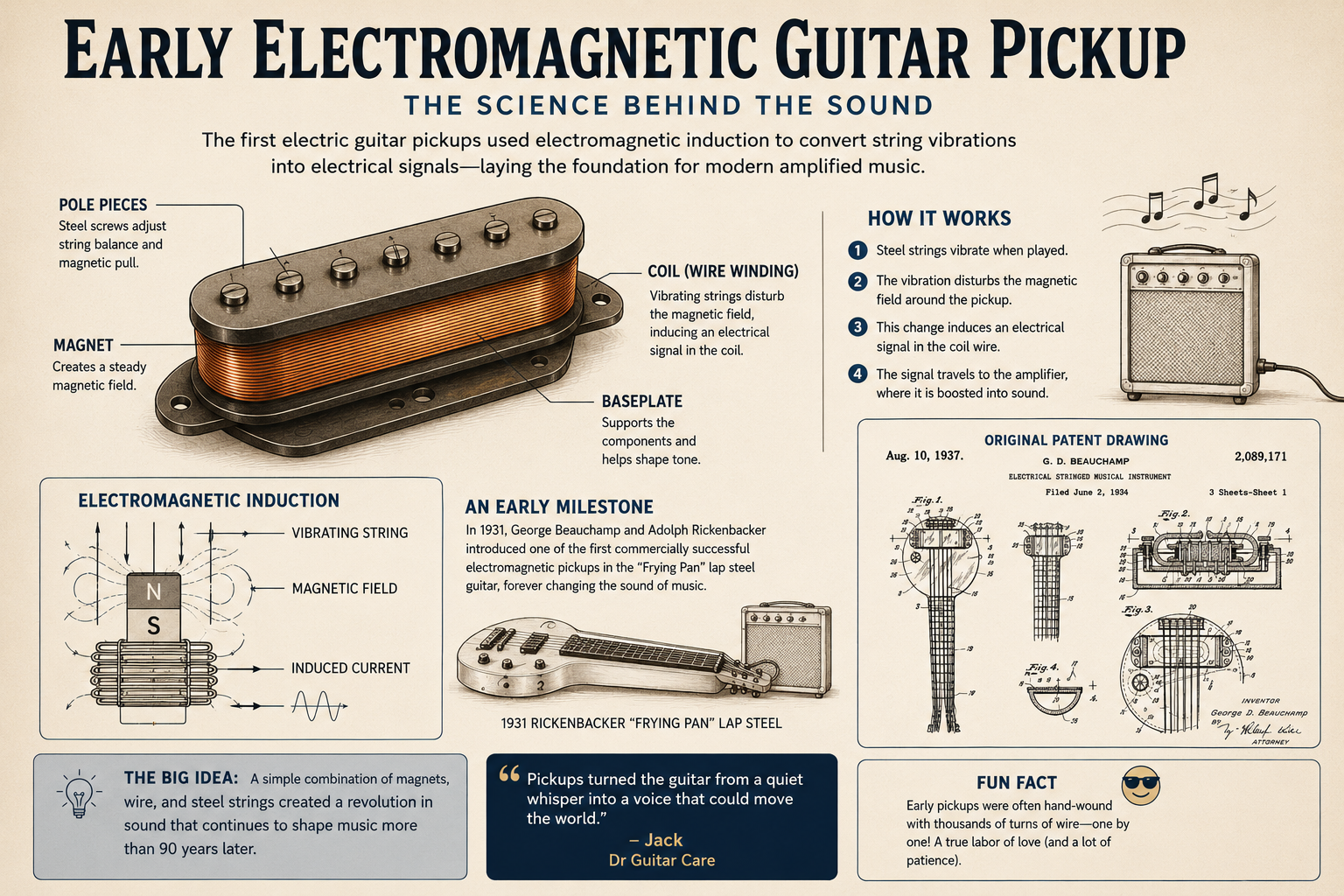
The strongest documented starting point for the modern guitar pickup is George D. Beauchamp’s practical electromagnetic pickup, developed for the early Electro String and Rickenbacker instruments around the early 1930s. The famous Rickenbacker “Frying Pan” lap steel was part of that story, and its horseshoe-magnet pickup helped turn string vibration into a usable electrical signal.
There were earlier electrical string-instrument ideas, but many of them were not modern sensing pickups in the way guitar players understand the term today. Beauchamp’s work matters because it connects directly to the familiar idea: metal strings vibrating in a magnetic field, a coil translating that motion, and an amplifier making the guitar heard.
Section 2
The Frying Pan Era: Not Kitchenware, but Close Enough
The Rickenbacker “Frying Pan” earned its nickname because of its round body and long neck. It looked less like a glamorous future rock-and-roll machine and more like something that might have been misplaced near breakfast. But historically, it was a serious breakthrough.
Its horseshoe-magnet pickup helped prove that a guitar-style instrument could be amplified in a practical, repeatable way. The instrument was designed as a lap steel, and that matters. The electric guitar’s earliest success was not born from a solid-body rock guitar. It came from players who needed Hawaiian and dance-band guitars to cut through a live setting.
This is where the story starts to turn. Once the guitar could be amplified directly from the strings, it was no longer limited by the size of the wooden box around it. A new musical personality had walked into the room.
Section 3
DeArmond and Rowe: Giving Old Guitars a Louder Mouth
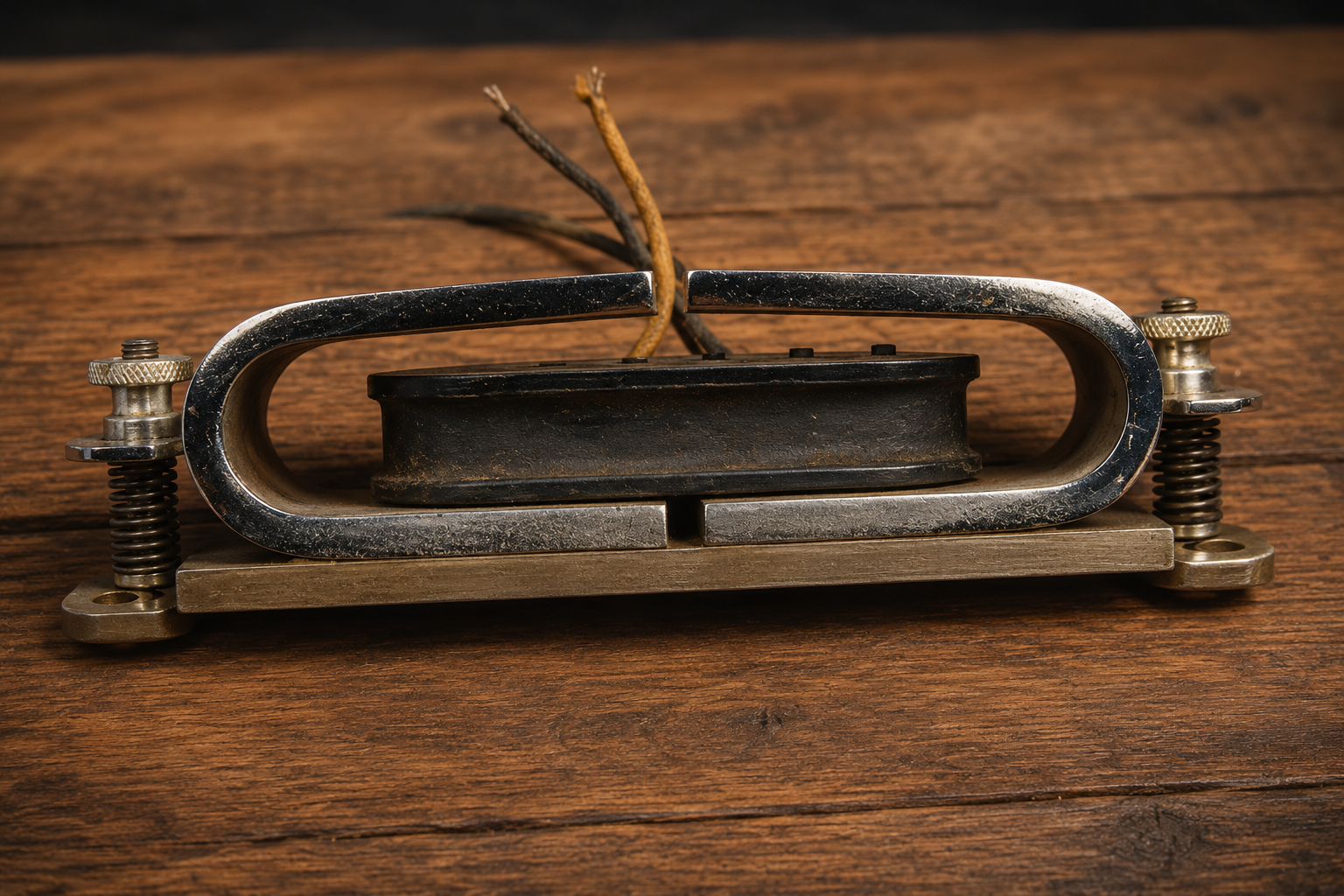
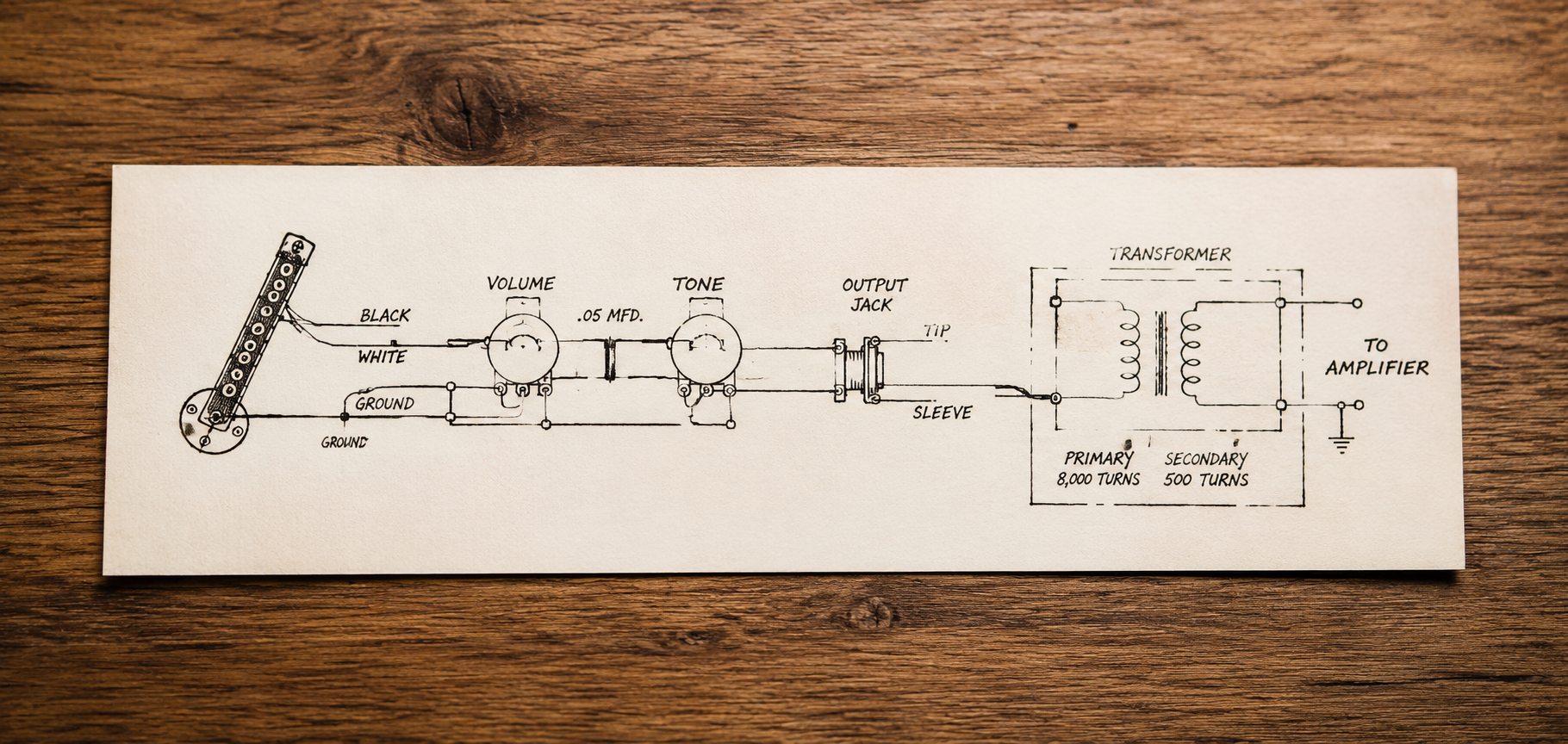
If Rickenbacker helped prove the electric guitar could work, Harry DeArmond helped make electrification more practical for players who already owned guitars. His detachable pickups gave flat-top and archtop players a way to amplify instruments without replacing them completely.
That was a major step. Not every guitarist wanted, needed, or could afford a brand-new electric instrument. A removable pickup meant an existing guitar could be brought into the amplified world with less drama. For working players, that kind of practicality mattered.
By the 1950s, DeArmond-style pickups were appearing on guitars sold under several well-known names. That makes DeArmond and Rowe Industries an important part of the broader pickup story: not just invention, but distribution, usefulness, and real-world adoption.
Section 4
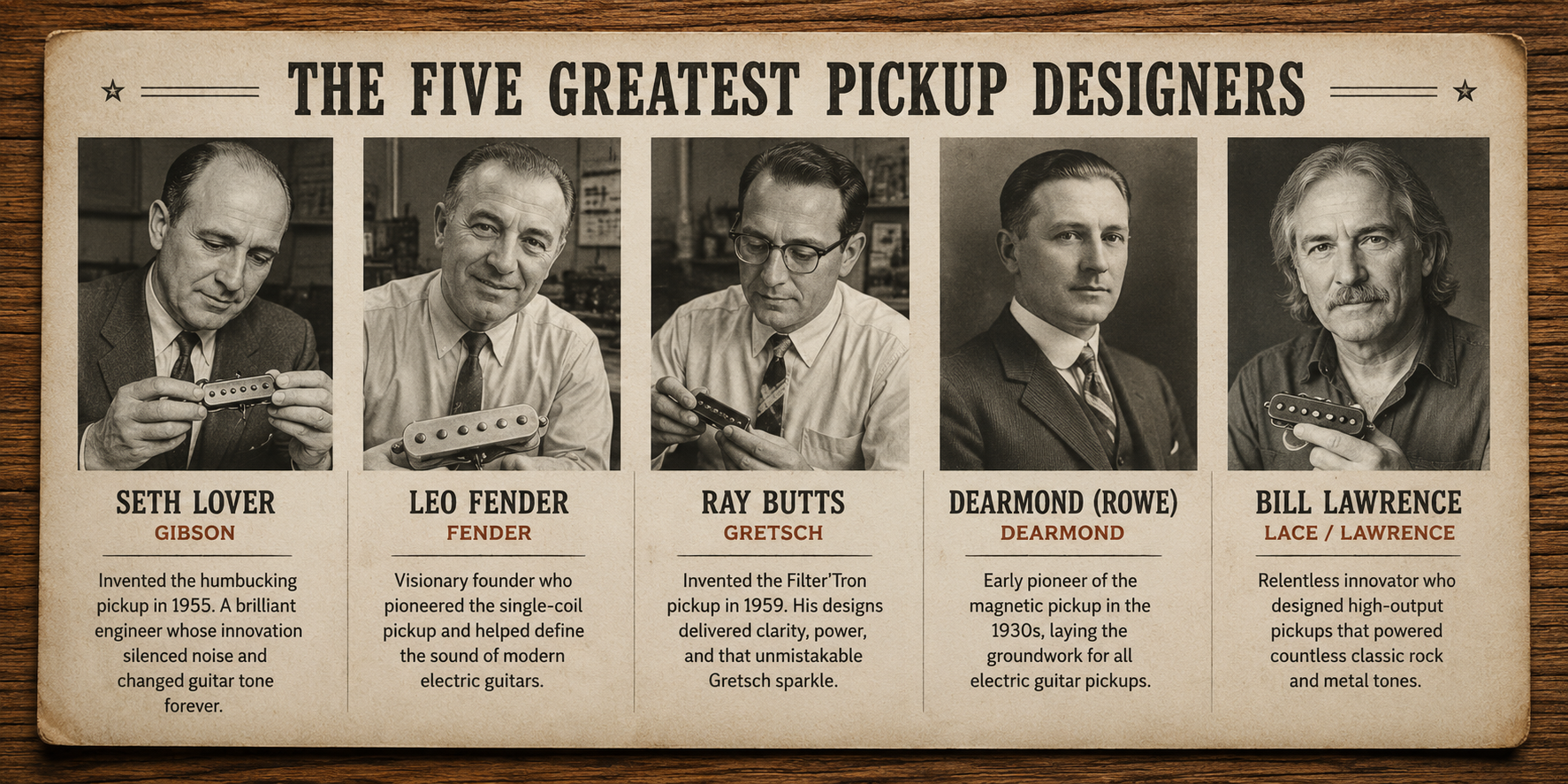
The Great Designers: A Cast of Clever Problem-Solvers
Pickup history is not one straight line. It is more like a workshop bench covered with good ideas, stubborn problems, and at least one missing screwdriver.
George Beauchamp
Beauchamp’s practical electromagnetic pickup helped establish the modern electric guitar idea. He gave the guitar a way to turn string motion directly into signal.
Harry DeArmond
DeArmond helped make pickups accessible through detachable designs that could bring existing instruments into the amplified age.
Seth Lover
Seth Lover’s humbucker design helped reduce noise and gave guitarists a thicker, smoother, stronger sound that became central to blues, jazz, rock, and hard rock.
Leo Fender & Fender’s Engineering Culture
Fender helped turn pickup tone into a mass-produced language: Telecaster bite, Stratocaster sparkle, Precision Bass authority, and Jazz Bass clarity.
Freddie Tavares
Tavares was part of Fender’s early engineering culture, helping shape instruments and practical designs that changed what players expected from electric guitars.
Larry Fishman
Fishman’s influence is especially strong in acoustic amplification, onboard systems, MIDI guitar, and modern pickup technology such as printed-core designs.
Section 5
The Technology Timeline: From Magnets to Modern Electronics
Pickup history is really the story of expanding ways to capture string vibration. The first practical magnetic pickups opened the door. Single-coils gave electric guitars clarity and personality. Gibson’s P-90 family added more midrange and muscle. Humbuckers reduced hum and created a thicker voice.
Fender’s split-coil Precision Bass pickup brought hum-canceling logic into the bass world while preserving punch and authority. Piezo and under-saddle pickups helped acoustic and classical instruments get amplified because they do not depend on metal strings in the same way magnetic pickups do.
Active pickups moved more signal shaping onboard. Later, MIDI, hexaphonic, optical, modeling, and printed-core systems moved pickup design closer to an integrated electronics platform. The pickup started as a magnetic ear. By the modern era, some systems had become small onboard committees politely deciding how the guitar should behave before the signal even reaches the amp.
Section 6
The Most Important Pickup Makers as of May 1, 2026
This list is best read as an editorial judgment, not a strict sales ranking. The measure here is influence: installed base, OEM presence, artist adoption, aftermarket importance, and innovation.
Fender
Fender remains essential because its pickup sounds are part of the basic vocabulary of electric music. Telecaster, Stratocaster, Precision Bass, and Jazz Bass tones are reference points.
Gibson
Gibson remains central because of the P-90 and humbucker legacy, especially the PAF-style sound that shaped blues, jazz, rock, and classic electric guitar tone.
Seymour Duncan
Seymour Duncan remains one of the strongest premium aftermarket pickup makers, covering vintage, modern, artist, bass, rails, stacks, and many PAF-inspired designs.
Fishman
Fishman is the modern innovation leader, especially in acoustic systems, Fluence electric pickups, MIDI guitar, and technology that stretches beyond traditional wire-and-magnet thinking.
DiMarzio
DiMarzio helped create the replacement-pickup culture. The Super Distortion helped normalize the idea that a player could change a guitar’s voice without replacing the whole instrument.
EMG
EMG remains the benchmark active-pickup name, known for strong output, low noise, clarity, consistency, and a major presence in heavier music and modern stage work.
A Note From the Bench
“Every guitar has a story. Sometimes the pickup is the little voice that finally gets it heard.”
— Jack, Dr Guitar Care
A Little Bench Humor
Tiny Magnets, Large Opinions
A pickup is one of the smallest parts on the guitar, yet somehow it has enough personality to start a 200-comment debate between perfectly decent adults.
That is the magic of guitar tone. One player hears sparkle. Another hears ice pick. A third says, “Try lowering it one turn.” Then everyone needs coffee.
From History to the Workbench
Why This Matters When a Guitar Is on the Bench
Pickup history is not just trivia. It helps explain why one guitar feels alive and another feels like it is trying to send a message through a wet sock. Pickup choice, pickup height, wiring condition, magnet style, pot values, shielding, soldering quality, and the overall setup all work together.
That is why a pickup swap should be treated as part of the whole instrument, not a magic cure-all. A great pickup can help a guitar speak more clearly, but it cannot fix bad fretwork, poor setup, unstable electronics, or structural problems hiding elsewhere.
For players looking at guitar pickup repair and replacement, guitar electronics repair, or custom guitar wiring, the best result usually comes from matching the pickup to the guitar, the player, and the actual problem. For high-end instruments, collectible guitars, and serious restoration work, it also helps to think about originality, reversibility, and long-term value.
Quick Review / SEO Q&A
Frequently Asked Questions About Guitar Pickups
Use this section as a fast review of the full article. It is built for readers who like short answers and for search engines that like clear questions. Everybody gets a chair at the table.
Closing Thought
Small Part, Big Personality
Pickups began as a way to make guitars louder. Over time, they became one of the biggest reasons guitars have personality. A pickup can make an instrument sparkle, growl, whisper, bark, complain, or finally say what it was trying to say all along.
And that is why this little piece of wire, magnet, engineering, and musical stubbornness deserves its place in guitar history.
Back to Top